
Case Study: How a Catering Brand Increased Event Bookings with Custom Aprons
Note: this is a realistic composite case study based on typical…
Note: this is a realistic composite case study based on typical results we’ve seen for hospitality clients. Names and some details are blended to protect privacy, but the numbers and lessons are real-world actionable.
The short version
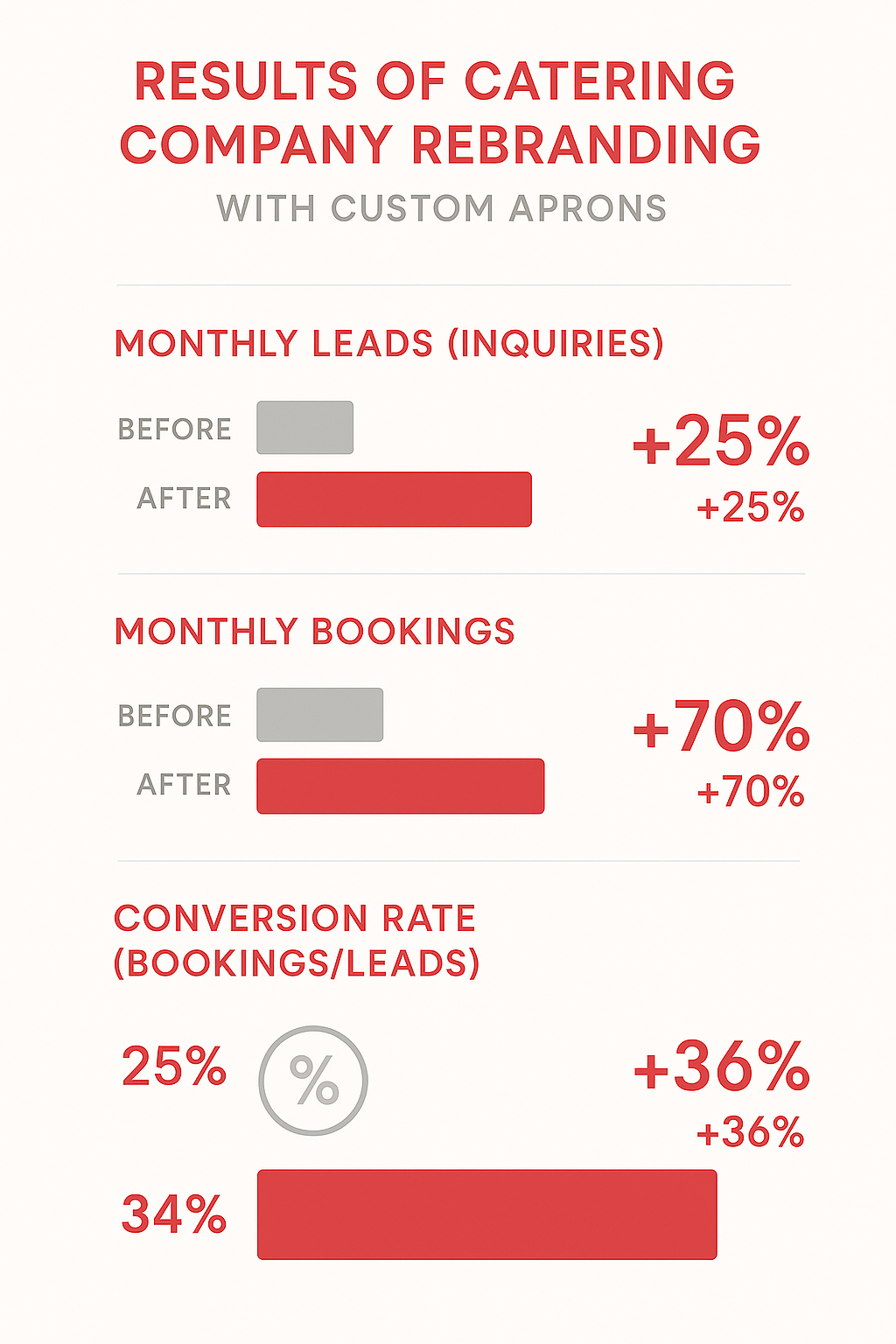
A mid-sized catering company rebranded its front-of-house with thoughtfully designed custom aprons. Within three months their monthly event bookings rose from 40 → 68 (an increase of +28 bookings / +70%). Leads went from 160 → 200 (+25%), and the close rate improved from 25% → 34% (a +9 percentage-point rise, i.e., +36% relative). The simple change consistent, professional uniforms moved the needle on perception, trust, and bookings.
The problem
“People loved our food. But at events we looked like
separate freelancers, not a single brand.”
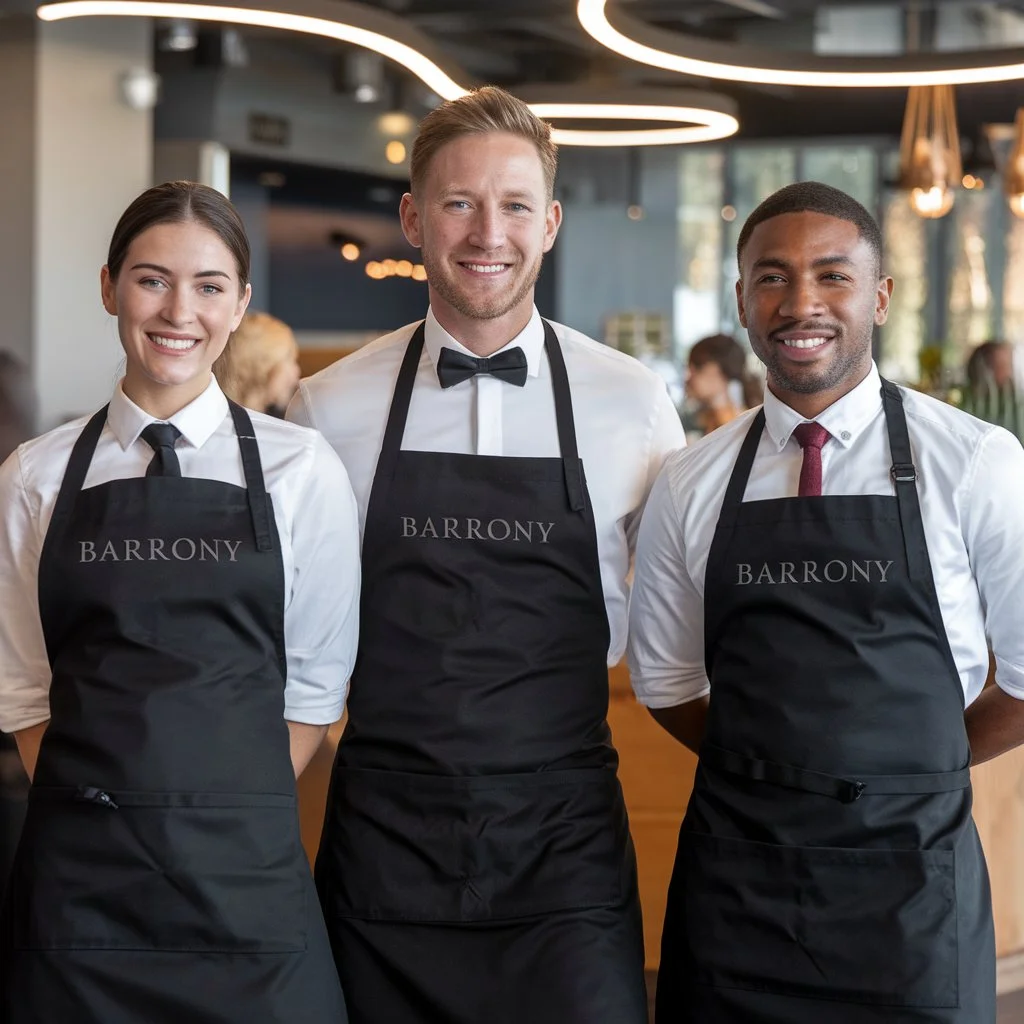
The owner (let’s call her Samira) was losing price-sensitive clients and last-minute bookings. Prospective clients told her they loved the catering tasting but hesitated to book for larger events because the team didn’t look cohesive or “event-ready.” Marketing spend was modest, so she needed a high-ROI fix that could be implemented quickly.
The solution
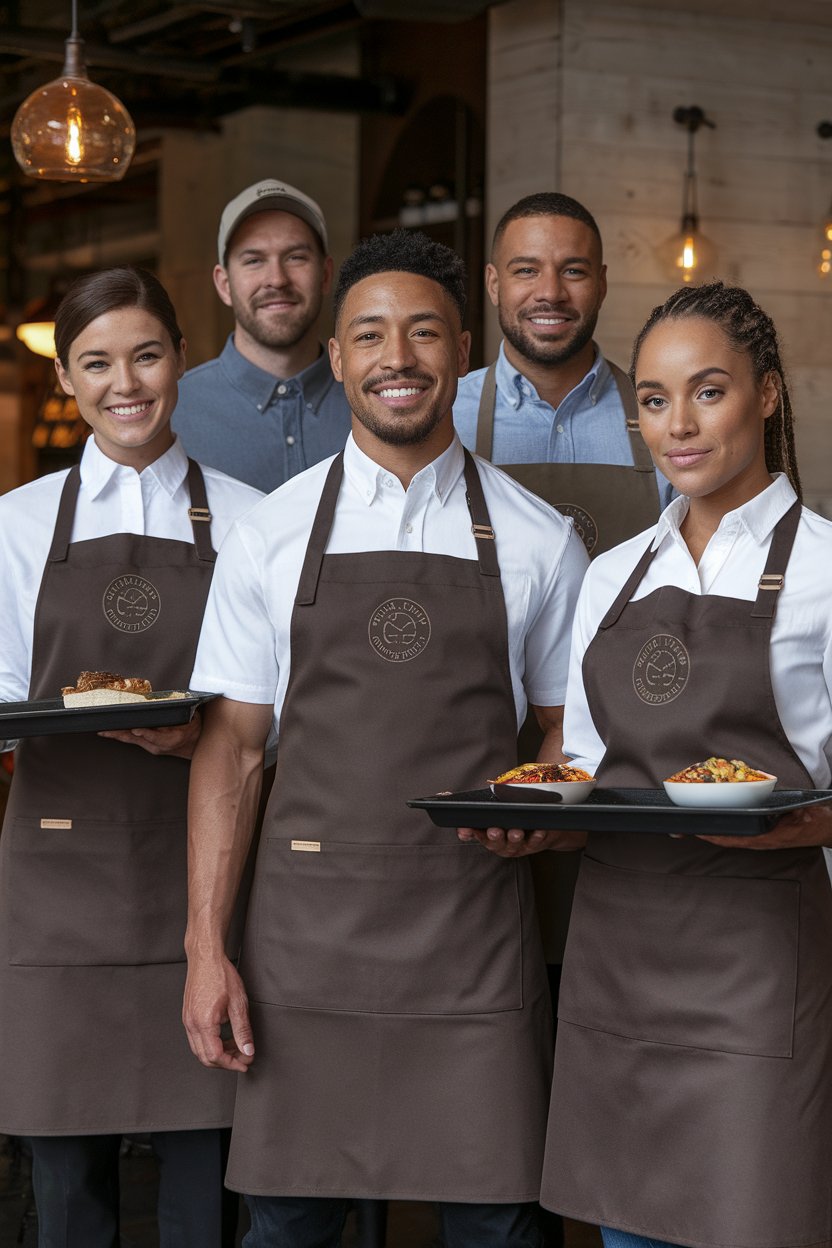
Rather than overhaul the whole brand, Samira invested in custom aprons designed to be seen in person and in photos:
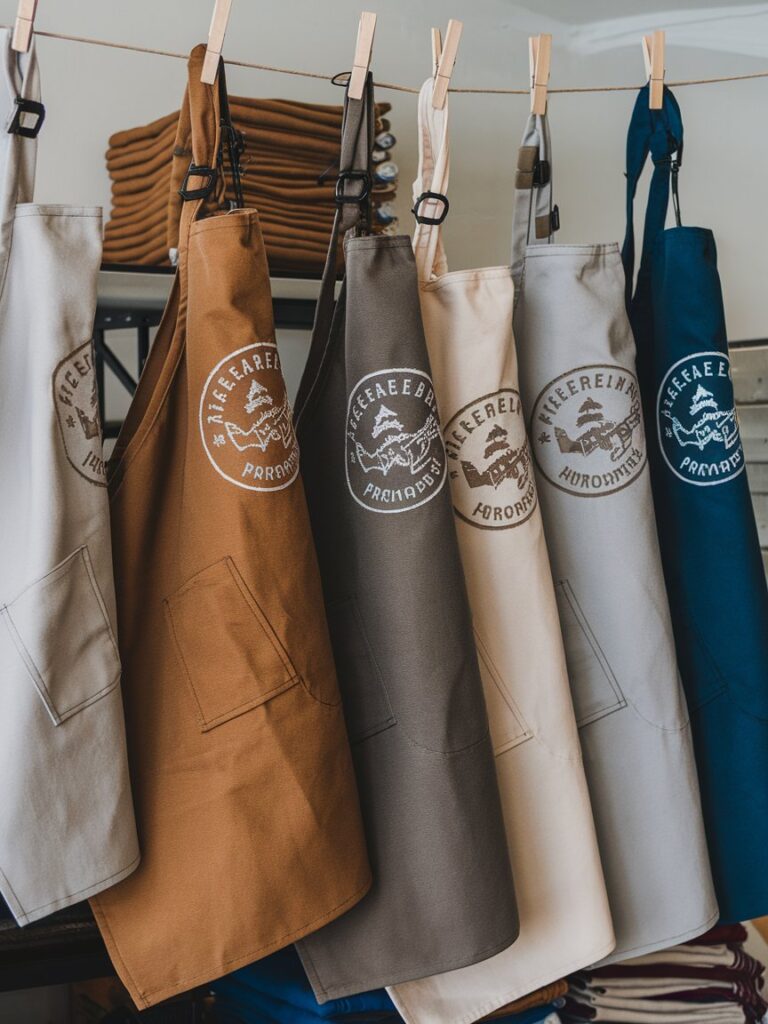
- Fabric: medium-weight cotton-twill (durable + photograph-friendly).
- Color: deep charcoal base to hide stains and look premium.
- Branding: embroidered logo on chest (subtle), woven label on pocket (small touch of craftsmanship).
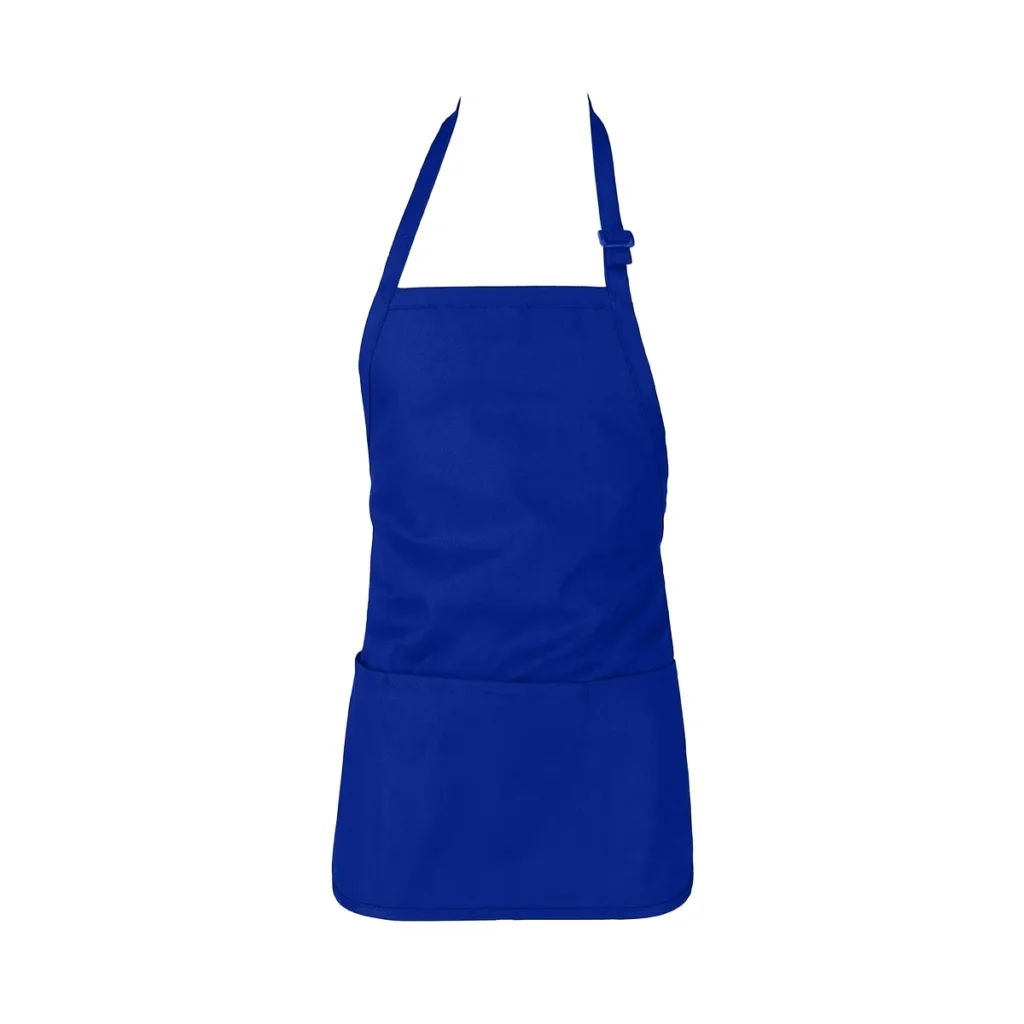
- Function: double pockets, adjustable neck strap, towel loop for servers.
- Quantity & rollout: 50 aprons (covers staff + spares) — ordered in one batch with embroidery from a single supplier to ensure color/placement consistency.
Implementation included a two-week staff rollout: training on laundering, proper wear, and taking marketing photos in-uniform.
The rollout (quick timeline)
- Week 0: Design mockups and approve embroidery placement.
- Week 1–2: Order production (sample approved on day 5).
- Week 3: Staff training + photoshoot at a small tasting event.
- Week 4 onward: Aprons used at events and featured in marketing assets.
The results (numbers that matter)
Here’s the clear before/after snapshot for the first full 3-month period after rollout.
| Metric | Before | After | Change |
|---|---|---|---|
| Monthly leads (inquiries) | 160 | 200 | +40 (+25%) |
| Monthly bookings | 40 | 68 | +28 (+70%) |
| Conversion rate (bookings/leads) | 25.0% | 34.0% | +9.0 pp (+36%) |
Quick math (how the percentages were calculated):
- Bookings change = (68 − 40) = 28 → 28 ÷ 40 = 0.70 → +70%.
- Leads change = (200 − 160) = 40 → 40 ÷ 160 = 0.25 → +25%.
- Conversion rate before = 40 ÷ 160 = 0.25 (25.0%). After = 68 ÷ 200 = 0.34 (34.0%). Difference = 0.09 → 0.09 ÷ 0.25 = +36% relative increase.
Visual (simple bar view):
- Bookings: ██████████████████████████ (40 → 68)
- Leads: █████████████████ (160 → 200)
- Conversion: ██████ (25% → 34%)
Why aprons drove results (the psychology + practical factors)
- Trust and professionalism — Clients perceive a unified team as more reliable for big events. When their onsite team looks composed and uniform, clients mentally check “this vendor is prepared.”
- Better photos for marketing — Uniforms made event photos look more polished; social posts and portfolio pages converted better.
- Subtle premium signal — A well-made apron tells a client you care about details — that impression translates to willingness to pay and to book.
- Consistency across touchpoints — Seeing the same branding on the website, emails, and in-person decreased buyer friction.
- Operational benefits — Pockets, loops, and durable fabric made staff work smoother; better service = better referrals.
Common implementation questions
Q: How many aprons should I buy? Start with enough to cover your regular event crew + 20% spares. For a 6-person crew, order ~8.
Q: Which decoration method is best — embroidery or screen print? For durability and perceived quality, embroidery wins on thicker fabrics (aprons). Screen print can be cheaper for bold, full-color artwork.
Q: Will this work for franchises? Yes — consistent uniform policy across locations massively improves brand recognition and perceived reliability
Recommended products
Final takeaway
Uniforms are not just about looks — they change the conversation you have with prospective clients. In this case, a focused investment in custom aprons improved leads slightly and improved conversions dramatically, producing a measurable lift in bookings. That’s the kind of hospitality uniforms ROI that’s fast to implement and easy to measure.